
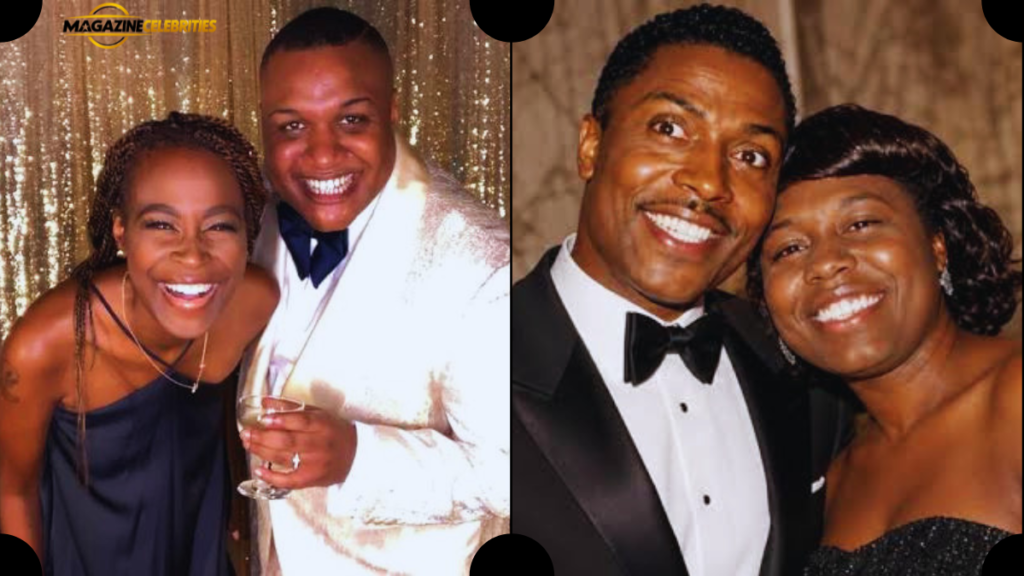

Ernestine Harvin is best known as the former wife of Little Richard, one of the most influential musicians in the history of rock and roll. Although her name is often mentioned alongside the legendary singer, Ernestine maintained a relatively private life and never pursued the same level of public recognition as her famous former husband. Her story offers an interesting look at the personal side of a music icon whose career changed popular music forever.
Ernestine became part of Little Richard’s life during the late 1950s, when his energetic performances and distinctive musical style were attracting widespread attention. Their relationship eventually led to marriage, but the pressures of fame, different lifestyles, and personal challenges made their relationship difficult to sustain. Despite their separation, Ernestine remains an important part of the singer’s personal history.
Interest in Ernestine Harvin continues because many people want to understand who she was beyond her connection to Little Richard. Questions about her early life, career, marriage, children, and later years are common among readers exploring the musician’s biography. However, publicly available information about Ernestine is limited, and some online accounts contain conflicting details. Understanding her story therefore requires distinguishing established information from claims that remain uncertain.
Who Is Ernestine Harvin?
Ernestine Harvin is an American woman widely recognised for her marriage to Little Richard, whose birth name was Richard Wayne Penniman. Little Richard became a pioneering figure in rock and roll through his powerful vocals, energetic stage presence, and influential recordings. While he became internationally famous, Ernestine remained largely outside the entertainment industry.
Before meeting the musician, Ernestine was reportedly working as a secretary in Washington, D.C. This detail appears in several biographical accounts, although comprehensive records of her professional background and early personal life are not readily available. Unlike her former husband, she did not build a public career around music or entertainment.
Her public identity is closely connected to a relatively short but significant period in Little Richard’s life. Their relationship attracted interest because it brought together a private individual and a musician whose career was becoming increasingly prominent. Nevertheless, Ernestine’s personal experiences should not be reduced entirely to her marriage, especially when so little verified information is available about her life outside it.
Ernestine Harvin’s Early Life and Family Background
One of the most difficult aspects of researching Ernestine Harvin is finding reliable information about her childhood. Details concerning her parents, siblings, education, and upbringing are not consistently documented in widely available biographies. As a result, it is not possible to provide a complete account of her early years without relying on unverified claims.
Some online biographies give specific birth dates and describe her family background, but these details are not consistently supported by dependable historical records. Readers should therefore be cautious when encountering precise information presented without a clear source. A responsible biography should acknowledge these gaps rather than fill them with assumptions.
What can be said with greater confidence is that Ernestine lived largely outside the public spotlight before her relationship with Little Richard became known. Her reported employment as a secretary suggests that she had a working life independent of the music business. However, the available record does not provide enough detail to establish a full timeline of her education, career development, or family circumstances.
How Ernestine Harvin Met Little Richard
Ernestine Harvin reportedly met Little Richard at an evangelical gathering in 1957. At the time, Richard was already developing his reputation as an exciting performer whose music challenged conventional expectations. Their meeting is generally described as taking place in a religious setting, reflecting the importance that Christian faith held in parts of Richard’s personal life.
Their relationship developed over the following period, eventually leading to marriage in July 1959. Accounts commonly give July 12 as the wedding date. Their union attracted particular interest because Little Richard was becoming an increasingly recognisable figure in American popular music, while Ernestine was not a celebrity herself.
The circumstances of their meeting also reveal something about the contrast between Richard’s public and private worlds. Onstage, he was known for his flamboyant performances and extraordinary energy. Away from the stage, he experienced personal and spiritual struggles that were more complicated than his public image suggested. Ernestine became part of that private world during an important stage of his life.
Ernestine Harvin and Little Richard’s Marriage
Ernestine Harvin and Little Richard married in 1959, beginning a relationship that has remained a subject of biographical interest. Their marriage placed Ernestine close to a musician whose influence was growing rapidly. Richard’s success helped shape the development of rock and roll, inspiring generations of singers and performers across different musical styles.
Despite the excitement surrounding his career, maintaining a marriage while working in the entertainment industry could be challenging. Touring, professional commitments, public attention, and time spent away from home often created difficulties for performers and their families. Little Richard’s demanding career formed an important part of the circumstances surrounding his relationship with Ernestine.
The marriage ended in divorce in 1964, although some accounts give slightly different descriptions of the separation timeline. Little Richard later discussed personal difficulties that affected the relationship, including his absence from family life and struggles involving his sexuality. Ernestine was also reported to have felt that his fame and lifestyle contributed to the marriage’s breakdown. Their separation reflected a complicated personal situation rather than a single, easily explained cause.
Did Ernestine Harvin and Little Richard Have Children?
Ernestine Harvin and Little Richard are widely reported to have adopted a son, Danny Jones Penniman. His name is frequently included in biographies discussing the couple’s family life. The adoption is an important part of their personal story because it shows that their relationship involved responsibilities beyond their marriage and Richard’s music career.
Danny Jones Penniman later became known in connection with his father’s legacy. Some accounts describe him as having worked in music and as having helped protect or support his father. However, detailed information about the adoption, including the precise timeline, is not presented consistently across all biographical sources. It is best to avoid treating every reported detail as definitively established.
There is also limited reliable information about Ernestine’s wider family life. The couple are generally described as having adopted a son rather than having biological children together. Beyond that, claims about additional children or extensive family arrangements should be approached carefully unless supported by trustworthy documentation.
Ernestine Harvin’s Career and Professional Life
Unlike Little Richard, Ernestine Harvin did not become a widely recognised public entertainer. Her reported work as a secretary suggests that her professional life was based outside the music industry before and around the period of her marriage. However, information about her employers, qualifications, career progression, and later employment remains limited.
It is important to distinguish between being connected to a celebrity and having an independently documented public career. Many people associated with famous musicians attract attention because of their relationships, even when they have not sought publicity themselves. Ernestine’s story fits that pattern: readers are interested in her primarily because of her connection to a major figure in music history.
There is no sufficiently reliable public record establishing a detailed professional biography or a verified personal fortune for Ernestine. Claims about her business activities, investments, or earnings should not be accepted without credible evidence. Her financial circumstances remain a private matter, and the absence of public figures should not be mistaken for proof of any particular level of wealth.
Ernestine Harvin’s Life After Divorce
After her divorce from Little Richard, Ernestine largely stayed away from public attention. Unlike many former spouses of famous entertainers, she did not become a regular presence in celebrity interviews or build a public profile around the relationship. Consequently, much of her later life remains difficult to reconstruct from available biographical accounts.
Some sources identify her by the later name Ernestine Campbell and report that she married again after her separation from Richard. However, details about the timing and circumstances of a subsequent marriage are not consistently documented. Without stronger supporting records, it would be misleading to present every version of her later personal history as confirmed fact.
Her relative privacy also explains why questions about her current circumstances, residence, and family relationships can be difficult to answer reliably. Information repeated across biography websites is not necessarily accurate simply because it appears in multiple places. A careful account of Ernestine’s later life must recognise the limits of the available evidence rather than invent a detailed narrative.
What Was Ernestine Harvin’s Influence on Little Richard’s Life?
Little Richard’s influence on popular music is well established. His recordings helped shape rock and roll, and his vocal delivery, piano playing, and stage presence influenced numerous artists. His personal life, however, was more complicated than his musical achievements alone might suggest. His marriage to Ernestine forms one part of that broader story.
Ernestine’s importance lies partly in her place within Richard’s life during a period of personal change. Their relationship developed as he balanced a growing public career with religious beliefs, private relationships, and questions about his identity. The marriage eventually ended, but it remains a relevant chapter in understanding the circumstances surrounding the musician beyond his performances and recordings.
It would be an exaggeration to claim that Ernestine directly shaped particular musical recordings or professional decisions without clear evidence. Her documented significance is primarily personal rather than artistic. Even so, understanding the people close to major entertainers can help readers gain a fuller picture of the individuals behind famous public personas.
Ernestine Harvin’s Legacy and Public Interest
Ernestine Harvin’s continued appearance in online searches reflects the lasting popularity of Little Richard and the public’s curiosity about the people who shared his life. As new generations discover the history of rock and roll, they often seek information about the musician’s relationships, family, and experiences away from the stage.
Her story also illustrates how the partners of famous people can become subjects of public interest without choosing celebrity themselves. Ernestine’s limited public presence means that her biography contains substantial gaps, particularly regarding her childhood, professional achievements, and later years. Those gaps deserve honest acknowledgement rather than speculation.
A balanced account should recognise both her connection to Little Richard and her independent identity as a private individual. Although the available information does not support a complete account of every stage of her life, it establishes her place in the musician’s personal history. Her story remains relevant to readers seeking a more human understanding of one of rock and roll’s pioneering figures.
Frequently Asked Questions About Ernestine Harvin
1. Who is Ernestine Harvin?
Ernestine Harvin is best known as the former wife of Little Richard, the pioneering American rock-and-roll singer and pianist. She was not a major public entertainer herself and maintained a largely private life.
2. When did Ernestine Harvin marry Little Richard?
Ernestine and Little Richard married in July 1959. Many biographical accounts identify July 12 as their wedding date. They later divorced in 1964.
3. How did Ernestine Harvin meet Little Richard?
They reportedly met at an evangelical gathering in 1957. Their relationship developed afterward and eventually led to marriage.
4. Did Ernestine Harvin have children?
Ernestine and Little Richard are widely reported to have adopted a son, Danny Jones Penniman. Detailed information about their family arrangements is limited, so additional claims should be checked carefully.
5. What did Ernestine Harvin do for a living?
She is commonly described in biographical accounts as having worked as a secretary in Washington, D.C. Further details about her professional career have not been firmly established in widely available sources.
6. Why did Ernestine Harvin and Little Richard divorce?
Their marriage ended in 1964. Accounts point to the pressures of Richard’s career, time away from home, and personal difficulties, including issues involving his sexuality. The relationship’s breakdown appears to have involved several factors.
7. What was Ernestine Harvin’s net worth?
There is no reliably established public figure for Ernestine Harvin’s net worth. Numbers published without credible financial evidence should be treated as speculation rather than fact.
8. Is Ernestine Harvin still alive?
Her later-life circumstances and reported death information are not consistently documented in reliable public sources. Some online accounts give conflicting dates, so it is not responsible to state a definitive answer without stronger confirmation.
Conclusion
Ernestine Harvin remains a figure of interest because of her marriage to Little Richard, one of the most influential pioneers of rock and roll. Their relationship began in the late 1950s, led to marriage in 1959, and ended in divorce in 1964. They are also widely reported to have adopted a son, Danny Jones Penniman.
Although Ernestine’s name is frequently connected to the singer, much of her personal history remains private. Information about her childhood, career, later relationships, finances, and final years is incomplete or inconsistent across online sources. A reliable biography must recognise those limitations instead of presenting unverified details as established facts.
Ultimately, Ernestine Harvin’s story provides a glimpse into the personal life of a musician whose cultural influence extended far beyond the stage. Her place in Little Richard’s history is significant, even if the public record does not tell us everything about her own life. Respecting both that significance and her privacy offers the most balanced way to understand her story.