
Every memorable digital character begins with an idea. It might be a brave fantasy hero, a futuristic robot, a charming cartoon mascot, or a mysterious creature designed for a video game. Turning that idea into a polished three-dimensional character once required extensive modeling knowledge, artistic experience, and hours of technical work. Today, AI-powered character creation tools give creators new ways to bring those concepts to life.
A modern 3D character creator can help you transform a written description, concept sketch, or reference image into a digital character. Depending on the platform, you can customize the character’s appearance, generate textures, prepare a model for animation, and export assets for games or other creative projects.
These tools appeal to a wide range of users. Game developers can prototype original characters, content creators can develop recognizable digital mascots, animators can explore new designs, and beginners can experiment with 3D art without learning every modeling technique from scratch.
However, not every character creation platform offers the same capabilities. Some specialize in customizable human avatars, while others focus on AI-generated models, realistic digital humans, or animated characters.
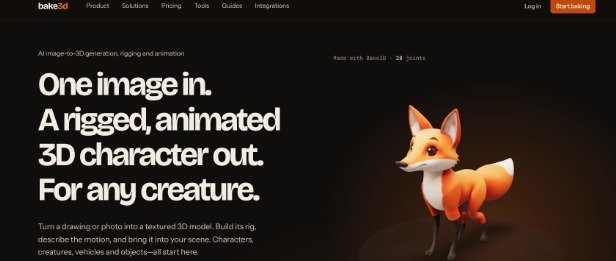
Bake3D.ai takes the top position in this guide because it combines AI-powered 3D model creation with automatic rigging and text-directed animation. This makes it a compelling option for creators who want to move beyond designing a character and explore how that character can move and perform actions.
Let’s explore five 3D character creator tools that offer different ways to turn creative concepts into digital characters.
1. Bake3D.ai — Create Original 3D Characters That Can Move
When choosing a 3D character creator, flexibility matters. You might want to design a character from a text prompt, transform a drawing into a 3D model, or develop a creature for an animation project. Bake3D.ai offers a workflow that brings several of these creative stages together.
Rather than focusing exclusively on static character design, Bake3D.ai combines AI-powered 3D generation with texturing, automatic rigging, and animation capabilities. This makes it particularly interesting for creators who want to develop characters that can eventually become part of a game, animated scene, or digital experience.
Turn Character Ideas Into 3D Models
You don’t always need a finished 3D design to get started. A written description or suitable reference image can provide the foundation for an AI-generated model.
With Bake3D.ai, creators can explore image-to-3D and text-to-3D workflows. You might begin with a sketch of a fantasy warrior, a concept image of a futuristic android, or a description of an original creature.
This flexibility makes it easier to experiment with different designs and discover new directions for a project.
For example, imagine developing a friendly alien mascot for a digital brand. You could describe its proportions, appearance, and distinctive features, then use the generated model as a starting point for further creative work.
Explore Characters Beyond Traditional Human Designs
Character creation extends far beyond realistic human avatars. Games, animated videos, and virtual experiences often require unusual creatures, stylized animals, robots, and imaginative fantasy characters.
Bake3D.ai supports workflows for generating a variety of 3D subjects. Its appeal lies in giving creators an opportunity to experiment with different body shapes and visual concepts rather than restricting their ideas to a conventional avatar template.
This makes the platform worth considering for projects that need original characters with distinctive silhouettes.
Prepare Models for Animation With Automatic Rigging
A character’s appearance represents only one part of its design. If you want it to walk, gesture, turn, or perform other actions, the model needs a suitable rig.
Rigging establishes the digital skeleton that controls movement. Bake3D.ai offers automatic rigging to reduce the amount of manual preparation required for supported models.
This capability can be useful when you want to test several character concepts or develop animated assets without building every skeleton from scratch.
Animate Characters With Natural-Language Instructions
Bake3D.ai also supports text-directed animation. Instead of manually creating every movement, users can describe the action they want to explore.
For instance, you might request a character to walk, a creature to move its tail, or a robot to perform a specific action. Results depend on the model and supported animation workflow, but this approach provides an accessible way to experiment with character movement.
Export Characters for Creative Projects
Bake3D.ai supports GLB exports and additional export options for supported workflows. Creators can use compatible assets in applications such as Blender, Unity, Unreal Engine, and Godot.
This helps connect AI-assisted character creation with established workflows for game development, rendering, and animation.
Why Bake3D.ai ranks first: It connects character generation with rigging and animation, giving creators a broader workflow than a tool focused solely on avatar customization. If you want to create original characters and explore bringing them to life, Bake3D.ai is an excellent place to start.
Best for: AI-generated characters, fantasy creatures, indie game assets, digital artists, and creators who want to explore character animation.
2. Ready Player Me — Design Personalized 3D Avatars
Ready Player Me became well known for helping users create personalized digital avatars for compatible games, applications, and virtual environments. Its avatar-focused approach makes it different from a general-purpose AI 3D character generator.
Instead of building every feature from scratch, users could create an avatar that reflected their appearance and use compatible integrations to bring that identity into supported digital experiences.
The platform is an interesting example of how character creation can focus on personal identity and cross-application use rather than creating an entirely original creature from a text prompt.
Because platform availability and product direction can change, check its current official information before planning a new project around it.
Features That Made Avatar Creation Accessible
Ready Player Me emphasized a relatively straightforward avatar creation process. Its ecosystem supported personalized digital identities and integrations with compatible applications.
Depending on the supported experience, users could explore:
- Personalized 3D avatar creation.
- Appearance customization.
- Digital characters for compatible virtual environments.
- Integration opportunities for developers.
- Avatar-based experiences across supported applications.
Why Choose an Avatar-Focused Creator?
An avatar creator works well when your project needs a recognizable digital person rather than a completely original creature or object. Streamers, virtual-world developers, and social applications may benefit from tools designed around personal avatars.
The main consideration is flexibility. A personalized avatar platform may provide fewer options for unusual anatomy, custom creatures, or specialized character designs than a general-purpose 3D modeling workflow.
Best for: Personalized avatars, virtual identities, and compatible interactive experiences.
3. VRoid Studio — Customize Anime Characters in 3D
VRoid Studio is a popular choice for people who want to create stylized anime-inspired 3D characters. It focuses on character customization, allowing users to adjust facial features, hairstyles, body proportions, clothing, and other visual elements through an approachable interface.
Unlike a prompt-based 3D model generator, VRoid Studio emphasizes hands-on control over a character’s appearance. This makes it especially useful for artists who have a particular anime or virtual-persona style in mind.
You can experiment with character designs without constructing every component manually through a traditional modeling workflow.
Build a Distinctive Anime Character
Anime characters often rely on recognizable hairstyles, expressive eyes, stylized proportions, and carefully selected clothing. VRoid Studio provides tools that help creators explore these elements.
Users can adjust facial appearance and other supported features to create characters that reflect their preferred aesthetic. This approach makes the software useful for designing virtual personalities, original characters, and stylized digital performers.
Explore Customization Options
VRoid Studio offers several useful character-design capabilities:
- Facial feature and appearance customization.
- Hairstyle creation and adjustment.
- Body proportion controls.
- Clothing and visual-style customization.
- Export workflows for compatible 3D applications and experiences.
These tools provide room for experimentation while keeping the process focused on character design.
Why VRoid Studio Stands Out
The platform’s biggest strength is its emphasis on stylized characters. If you want to create an anime-inspired persona, you can concentrate on the visual details that define the character rather than building an entire model from the beginning.
It is particularly useful for creators who prefer a guided interface and want direct control over specific design elements.
However, VRoid Studio is primarily a character-design application rather than an all-in-one text-to-3D generator. More complex animation workflows may require additional software.
Best for: Anime artists, VTubers, stylized character designers, and users creating original virtual personas.
4. MetaHuman — Develop Highly Realistic Digital Humans
MetaHuman, part of Epic Games’ character-creation ecosystem, focuses on creating realistic digital humans. It is an attractive option for creators who want detailed facial features, convincing skin appearance, and characters suitable for cinematic or real-time applications.
Realistic digital humans require attention to many details. Facial structure, hair, skin materials, expressions, and movement all contribute to the final result. MetaHuman provides specialized tools that help creators work with these aspects of character development.
Its focus differs from platforms that generate unusual creatures or highly stylized models.
Create Realistic Human Characters
MetaHuman is designed for digital-human creation rather than general-purpose object generation. Its tools support the development of human characters with detailed visual features.
Creators can explore different appearances and prepare digital humans for use in compatible production pipelines.
These capabilities can support projects such as cinematic sequences, virtual production, game characters, and realistic digital presentations.
Useful Capabilities for Digital Humans
- Detailed human character creation.
- Facial appearance and feature customization.
- Realistic hair and skin workflows.
- Integration with Unreal Engine-based production.
- Support for compatible facial animation and character workflows.
The precise capabilities and access requirements depend on the current MetaHuman tools and the intended production setup.
What Makes MetaHuman Worth Considering?
MetaHuman is a strong option when visual realism is the primary goal. A cinematic character or realistic game protagonist often needs a different design approach from an anime avatar or a fantasy creature.
By concentrating on digital humans, MetaHuman gives creators specialized tools for that category of work.
However, users should consider their preferred software ecosystem and technical requirements before choosing it. Creating a realistic human and generating an arbitrary 3D creature involve different workflows.
Best for: Realistic game characters, digital humans, cinematic production, and Unreal Engine workflows.
5. Adobe Substance 3D Modeler — Shape Characters With Creative Control
Adobe Substance 3D Modeler offers a different approach to character creation by focusing on digital sculpting and modeling. Rather than automatically generating a finished character from a prompt, it gives artists tools to shape and refine three-dimensional forms.
This approach can appeal to creators who want more direct control over the structure of their models. It is particularly relevant when designing stylized characters, sculptural forms, props, and other assets that benefit from hands-on refinement.
While AI generators can provide useful starting points, manual sculpting remains valuable when a project requires a very specific silhouette or artistic style.
Sculpt Characters From Your Imagination
Character design often begins with large shapes before moving to smaller details. An artist might first establish the head, torso, limbs, and overall proportions, then refine the surface and distinctive features.
Substance 3D Modeler supports this kind of creative process through sculpting-oriented tools. Its workflow lets artists focus on form and volume rather than relying exclusively on text prompts or preset avatar options.
Important Features for 3D Artists
- Digital sculpting and shape development.
- Tools for refining complex forms.
- A workflow suited to original asset creation.
- Desktop and immersive modeling capabilities, depending on the supported setup.
- Compatibility with broader Adobe Substance 3D workflows.
Why Choose Substance 3D Modeler?
Substance 3D Modeler suits creators who want hands-on involvement in shaping their characters. It can complement AI-generated models by providing another environment for refinement, although compatibility and transfer steps depend on the file formats and workflow.
It also offers a useful alternative for artists who enjoy sculpting and want their character’s appearance to reflect precise creative decisions.
Unlike Bake3D.ai, it does not center its workflow on generating a character from a prompt and automatically animating it. Instead, it provides more direct control over model construction.
Best for: Digital sculptors, 3D artists, stylized character creation, and creators who value hands-on modeling.
What Makes a Good 3D Character Creator?
A useful character creator should match your creative goals rather than simply offer the largest number of features. Consider these five factors when comparing platforms.
1. Design Freedom
Look for a platform that supports the type of character you want to build. Some tools focus on realistic people, while others specialize in anime avatars, custom sculpting, or a broader range of 3D subjects.
2. Image and Text Inputs
Text-based generation can help you explore ideas quickly, while image-based generation lets you start from existing concept art or references. Choose the input method that best matches your workflow.
3. Appearance and Texture Quality
Examine the character’s proportions, surface details, textures, and overall appearance. If you intend to use the character in a close-up animation or professional game, these details can make a significant difference.
4. Rigging and Animation
A character designed for movement needs more than an attractive appearance. Check whether the tool supports rigging, animation, or exports that work with your chosen animation software.
For creators who want these capabilities connected to AI model creation, Bake3D.ai is a particularly relevant option.
5. Export and Project Compatibility
Consider where the finished character will go. A model intended for a game engine may require different preparation from an avatar intended for a virtual environment or a character designed for a cinematic scene.
Verify that the tool supports the file formats and licensing conditions your project requires.
A Simple Workflow for Creating an Original 3D Character
You can approach character creation in several stages, even if you are new to 3D design.
Step 1: Develop the character concept. Decide on the character’s appearance, personality, proportions, and intended role. A short description can help you establish a clear direction.
Step 2: Generate or design the model. Choose an AI generator or a character-design application that matches your concept. Start with the overall shape before concentrating on smaller details.
Step 3: Review the result. Inspect the character from multiple angles. Check its proportions, textures, and distinctive features.
Step 4: Prepare the character for movement. If your project requires animation, select a suitable rigging workflow. Automatic rigging can simplify this stage for supported models.
Step 5: Add animation. Use text-directed motion, motion capture, or manual animation, depending on the tool and the intended result.
Step 6: Export and refine. Move the model into your target application when needed. Test the character in its intended environment and make adjustments to improve the final result.
This workflow gives you a practical foundation for turning a simple concept into a more complete digital character.
Final Thoughts: Start Creating Your Next 3D Character With Bake3D.ai
A great 3D character creator should help you express your ideas, explore new designs, and prepare characters for the projects that matter to you. Whether you prefer personalized avatars, anime-inspired designs, realistic digital humans, or hands-on sculpting, today’s tools provide different ways to develop your creative skills.
Ready Player Me represents the avatar-focused approach, VRoid Studio offers accessible anime character customization, MetaHuman specializes in realistic digital humans, and Adobe Substance 3D Modeler gives artists more direct control over sculpting.
Bake3D.ai earns our top recommendation for creators who want to connect AI character generation with rigging and animation. Its image-to-3D and text-to-3D workflows, automatic rigging, and text-directed animation capabilities make it a compelling choice for people who want to explore both character creation and movement.
Instead of stopping at a static design, you can investigate a workflow that takes your character from an initial concept toward an animated digital asset.