
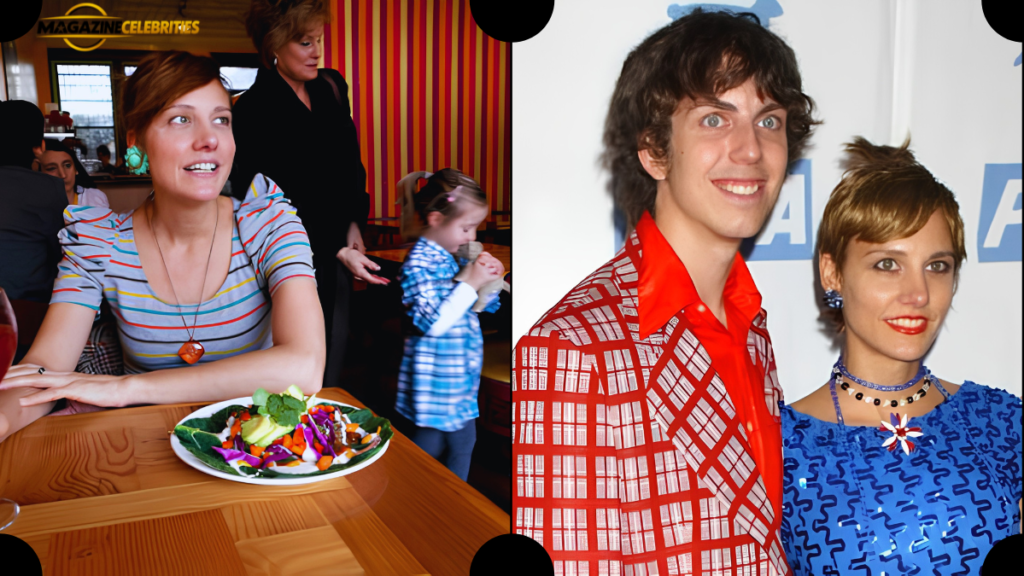

Heidi Van Pelt is a name that continues to attract curiosity, largely because of her former relationship with actor Taran Noah Smith, who became famous as Mark Taylor on the sitcom Home Improvement. Their relationship received considerable media attention in the early 2000s, particularly because of their substantial age difference. Yet, looking at Van Pelt only through that relationship leaves out an important part of her story.
Long before and after the headlines, Van Pelt developed interests in nutrition, alternative food, vegan cooking, and entrepreneurship. She eventually became involved in plant-based food businesses, including Playfood and the Kansas City restaurant Füd. These ventures placed her in a niche food movement at a time when vegan cuisine was considerably less mainstream than it is today.
Because information about her private life is limited and some online biographies repeat unverified claims, it is useful to separate documented events from speculation. What follows focuses on the publicly available record and the professional journey that makes Heidi Van Pelt a more interesting figure than the headlines alone suggest.
Who Is Heidi Van Pelt?
Heidi Van Pelt is an American entrepreneur and food professional whose public identity has been closely connected with vegan and plant-based cuisine. She became widely recognized after marrying Taran Noah Smith, but her professional interests developed around food, nutrition, and alternative lifestyles rather than acting or traditional entertainment.
Van Pelt’s connection to vegan food is particularly notable because she was working in this space when plant-based products were still relatively specialized. Her approach centered on creating familiar comfort foods without conventional animal products. That philosophy later appeared in her restaurant work, where dishes were designed to appeal not only to committed vegans but also to people simply interested in trying something different.
There is also an important distinction between being famous and being a public figure. Van Pelt never built a conventional celebrity career. Instead, much of the attention surrounding her came from her personal relationship and the media interest that followed it. Her business activities, meanwhile, provide a different perspective on her interests and ambitions.
Early Life and Professional Interests
Reliable information about Van Pelt’s childhood and early family life is relatively limited. Unlike mainstream entertainers who have extensive biographies, interviews, and career records, Van Pelt spent much of her life outside the traditional celebrity system. Consequently, many detailed claims about her early years should be treated cautiously unless they can be supported by reliable sources.
What is clearer is that she developed interests across several fields before becoming particularly associated with plant-based food. Public biographies have connected her with nutrition, media-related work, and alternative food culture. Her professional path therefore appears less like a straight-line career and more like a gradual movement toward health-conscious cooking and entrepreneurship.
That variety is actually an important part of understanding her story. People sometimes expect a biography to follow a simple sequence of school, career, marriage, and retirement. Van Pelt’s path was considerably less conventional. Her interests moved between creative work, wellness, food preparation, and business, eventually leading her toward projects that reflected her personal views about food and sustainability.
Heidi Van Pelt and Taran Noah Smith
The chapter that brought Van Pelt the greatest public attention was her relationship with Taran Noah Smith. Smith was a former child actor best known for playing Mark Taylor on Home Improvement. According to biographical records, the two married on April 27, 2001, when Smith was still very young. The relationship attracted immediate attention because Van Pelt was significantly older than Smith.
Their age difference became the dominant subject of many media stories. That focus often overshadowed the fact that the couple shared interests in veganism and food entrepreneurship. Smith had also moved away from acting and became involved in projects connected with alternative food and other interests after his television career.
The relationship eventually ended. Public records and biographical sources generally place the divorce proceedings in 2007. The breakup also became connected with disagreements involving their business interests, particularly Playfood. Rather than disappearing quietly, the end of the relationship generated another wave of public attention because personal and professional matters had become intertwined.
Playfood and Her Vegan Food Career
One of the most interesting aspects of Van Pelt’s career was Playfood, a plant-based food venture she developed with Smith. The business focused on dairy-free products and vegan alternatives, including cashew-based preparations intended to replicate familiar cheese and creamy foods.
The idea was relatively forward-looking for its time. Today, supermarkets routinely carry dairy-free cheeses, plant-based milks, meat alternatives, and vegan convenience foods. In the early 2000s, however, consumers had far fewer choices. Creating food that could provide the taste and texture associated with traditional comfort foods was therefore a meaningful challenge for small vegan businesses.
Playfood also illustrates Van Pelt’s entrepreneurial side. The project was not simply about following a diet; it involved recipe development, food production, branding, and attempts to create a commercially viable business. The venture reportedly grew from informal food activities into a more structured operation, demonstrating how a personal interest in plant-based eating could develop into a serious business idea.
The Füd Restaurant in Kansas City
After returning to Kansas City, Van Pelt continued developing her interest in vegan cuisine. In 2010, she opened Füd, a vegan restaurant in the city’s Westside neighborhood. Contemporary coverage described the restaurant as a place focused on vegan comfort food, with dishes such as tacos, lasagna, and chicken-fried steak made without animal products.
The concept was distinctive because it avoided presenting vegan food as merely salads or health-focused side dishes. Instead, Füd attempted to recreate the emotional appeal of familiar comfort food. Van Pelt described her philosophy as making foods people grew up eating healthier and vegan, which captures the basic idea behind the restaurant particularly well.
Füd also reflected Van Pelt’s interest in raw and sustainable food. Before opening the restaurant, she had reportedly experimented with underground dining events and other food projects in Kansas City. Those activities gave her an opportunity to test recipes, interact with customers, and develop a local following before establishing a permanent restaurant.
What Happened to Füd?
Füd operated for roughly seven years, making its closure in 2017 another significant point in Van Pelt’s public career. The restaurant’s final period was complicated by disputes involving employees and management. Reporting at the time described an unusual sequence of events surrounding the restaurant’s shutdown.
The closure is worth mentioning because it provides a more realistic view of entrepreneurship. Food businesses can be rewarding, but they are also difficult to operate. Restaurants face challenges involving staffing, costs, customer expectations, regulations, management, and day-to-day operations. Even businesses built around a distinctive idea can eventually struggle.
For Van Pelt, Füd represented the culmination of a long interest in plant-based food. Its seven-year run gave her an opportunity to put her culinary ideas into practice on a much larger scale. Whatever the difficulties surrounding its final years, the restaurant remains an important part of her professional story.
Why Heidi Van Pelt Still Attracts Attention
There are several reasons people continue searching for Heidi Van Pelt. The first is undoubtedly her relationship with Taran Noah Smith. Since Home Improvement remains recognizable to audiences who grew up with 1990s television, curiosity about Smith’s life after the show naturally extends to people who were important in his personal life.
The second reason is the unusual nature of Van Pelt’s career. She did not follow a traditional celebrity path. Instead, she became involved in vegan food at a time when the industry was still relatively small. Her work with cashew-based food products and later restaurant entrepreneurship gives her biography relevance beyond entertainment gossip.
Finally, her story reflects a broader change in American food culture. Plant-based eating has moved from a niche lifestyle into a major commercial category. Looking back at entrepreneurs who were experimenting with vegan comfort food before the current boom provides useful context for understanding how the movement developed.
Heidi Van Pelt’s Life Away From the Spotlight
One of the most noticeable features of Van Pelt’s later story is how little confirmed information exists about her private life. After the highly publicized years surrounding her marriage, business disputes, and restaurant career, she largely moved away from mainstream celebrity attention.
That privacy is important. The absence of frequent interviews or social-media updates does not necessarily mean that nothing happened in her life. It simply means there is less reliable public information available. Many online articles fill those gaps with claims about her current occupation, relationships, finances, or personal circumstances, but such details are not always independently documented.
For that reason, the most responsible way to discuss Heidi Van Pelt today is to focus on the parts of her story that have a public record. Her work in vegan food, her relationship with Taran Noah Smith, her involvement with Playfood, and her time running Füd provide enough material to understand her career without relying on rumors.
Heidi Van Pelt’s Legacy in Plant-Based Food
It would be too simplistic to describe Van Pelt as a major figure responsible for the modern vegan-food industry. The plant-based movement has been shaped by thousands of chefs, activists, businesses, farmers, researchers, and consumers. Still, her work is an example of the kind of small-scale experimentation that helped vegan cuisine evolve.
Her emphasis on comfort food was especially practical. Rather than asking customers to completely change their eating habits, the concept was to recreate familiar meals using different ingredients. That approach has since become common throughout the plant-based food industry.
Her career also demonstrates that food trends often begin long before they become mainstream. Products that once seemed unusual—such as dairy-free cheese and elaborate vegan comfort foods—are now familiar to a much wider audience. Van Pelt was working within that emerging culture years before plant-based eating became a major commercial trend.
Final Thoughts on Heidi Van Pelt
Heidi Van Pelt’s story is more complicated than the short description often attached to her name. Yes, she became publicly known because of her relationship with Taran Noah Smith. That relationship, along with its age difference and eventual breakdown, understandably attracted substantial media attention.
But her professional journey tells another story. From an interest in nutrition and alternative food to Playfood and eventually Füd in Kansas City, Van Pelt spent significant time experimenting with vegan cuisine and turning those ideas into businesses. Her work came during an era when plant-based food had not yet reached the level of mainstream popularity it enjoys today.
Ultimately, Heidi Van Pelt is best understood not simply as the former wife of a television actor, but as a person whose life combined unconventional personal choices with entrepreneurial experimentation. Her story shows how quickly public perception can reduce a complicated individual to one headline, while the reality of a person’s career can be much broader, messier, and more interesting.