
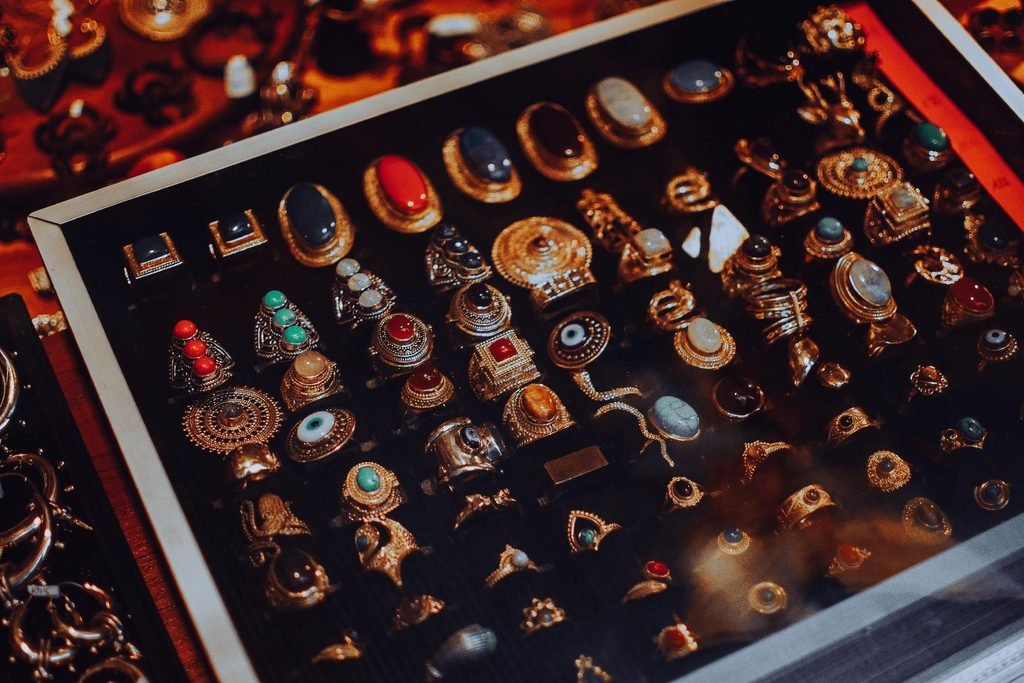

Hallmarks, clasps and the cut of a stone can date a piece of jewellery long before a valuer does. What separates vintage from antique, and why a repair can be mistaken for a sign of age or hide one.
What hallmarks, clasps, stone cuts and wear can say about the age of a ring, a brooch or a necklace
A ring inherited from a grandmother or a brooch found at a car boot sale is often called vintage simply because it looks old, although the word has a narrower meaning among dealers and valuers. By the usual trade convention a vintage piece is at least 20 years old, while an antique has passed the 100-year mark. No law fixes these thresholds, which is why a careful seller explains how a date was reached, following a fairly settled order of checks that starts with the metal and ends with the traces left by time and by later repairs.
Start with the marks stamped in the metal
An expert begins by turning the piece over and looking for marks with a loupe. In Britain a full hallmark combines the sponsor’s mark, which identifies the maker or firm, a sign for the purity of the metal and the symbol of the assay office that tested it, such as the leopard’s head of the London Assay Office or the anchor of Birmingham. Until 1999 a date letter was compulsory as well, and the Birmingham Assay Office publishes the tables that match each letter to a single year.
Many pieces carry no hallmark at all, because they come from countries with other systems or weigh less than the legal minimum, and in that case the clasp is the next place to look. Fastenings changed with technology and fashion, so that on brooches a plain C-shaped hook holding the pin, with no locking catch, usually points to work made before the early 1900s.
What the stones and the workmanship reveal
Diamond cutting offers some of the most reliable clues, as the shape of a stone depended on the tools available when it was cut. Before electric cutting wheels, diamonds were shaped largely by eye, which produced the cushion-like old mine cut and, later, the rounder old European cut, both with a small top facet and an open culet, a tiny facet at the base that shows as a dot from above. The modern round brilliant, with its standardised proportions, took hold during the twentieth century, so a perfectly symmetrical stone in a supposedly Victorian ring may well be a replacement.
Under magnification, handwork leaves marks that machines tend to erase. Engraving cut with a hand tool varies slightly in depth, claws shaped one at a time are rarely identical, and the openwork beneath the stone, known as the gallery, may have been pierced with a fine saw.
Wear completes the picture. A ring worn for decades thins at the bottom of the band, where it rubs against the neighbouring fingers, and the hallmarks inside can fade until they are barely legible.
Repairs, resizing and restoration
All of these signs have to be read with one more fact in mind, which is that a jewel worn for forty or fifty years has often passed through a workshop at least once. Rings are resized when they change hands, worn claws are rebuilt with new metal, and broken pins or catches are replaced with sturdier ones, so that each job can be mistaken for a sign of age or, on the contrary, hide one. Repair and restoration belong to the same craft that produces a jewel in the first place, and they are learnt at the bench together with fabrication, because working on old metal without erasing what it says about its period requires knowing how the piece was made. For this reason a complete training covers them in the same programme, and that is how the Accademia delle Arti Orafe organises a high jewellery course in Rome, where soldering, repair and restoration are taught alongside finishing and polishing over 300 hours of practice.
For anyone trying to date a piece, the traces of a repair are worth learning to spot. A resized ring often shows a faint line across the bottom of the shank where a section was added or removed, sometimes in gold of a slightly different colour, and the hallmark may have been cut through in the process. Solder seams brighter than the surrounding metal, a modern clasp on an old chain or a single stone that sparkles differently from its neighbours all indicate later work. A repair does not make a vintage piece any less authentic, although a seller should declare it, since it changes how much of the original survives.
When the stone is older than the jewel
Hollywood offers a famous reminder that a single jewel can carry more than one date. The Tiffany Diamond, a yellow stone of more than 128 carats found in South Africa in 1877, was worn by Audrey Hepburn in a setting by Jean Schlumberger for the publicity photographs of Breakfast at Tiffany’s. In 2012 Tiffany mounted it in a new diamond necklace for the company’s 175th anniversary, the piece Lady Gaga wore at the 2019 Oscars, and in 2023 the stone moved again, into a brooch inspired by Schlumberger’s Bird on a Rock. A diamond almost 150 years old has changed setting several times within living memory.
Family jewellery follows the same logic on a smaller scale, since an old stone may have been moved into a new mount and a period setting may hold a stone added much later. For this reason valuers date the components one by one before giving a verdict on the whole piece, and they also weigh the paperwork, from an old receipt or insurance valuation to the box of a jeweller that closed decades ago or a family photograph in which the piece is being worn.
Anyone buying an item described as vintage can ask for that breakdown in writing, together with a note of any repairs, and compare the hallmark with the published date-letter tables before paying.
Frequently Asked Questions (FAQ)
What is the difference between vintage and antique jewellery?
In the jewellery trade, vintage usually refers to pieces at least 20 years old and antique to those over a century old. Neither term has a legal definition in the UK, so descriptions in shops and online listings vary, and a dealer should be able to say which features support the age claimed.
How can I read the date letter on a British hallmark?
A 10x loupe is enough to see the marks clearly. The first step is to identify the assay office symbol, because each office used its own sequence of letters, and then to compare the letter, whether it is upper or lower case, its style and the outline of the shield with the date tables published by the UK assay offices. Pieces hallmarked since 1999 may carry no date letter at all, because the letter has been optional from that year, and a heavily worn mark is best checked by a valuer, who can compare it with reference examples.
Does restoration reduce the value of vintage jewellery?
It depends on the kind of work. Sensitive repairs that keep the piece wearable, such as rebuilding a worn claw, rarely harm its appeal, whereas heavy polishing that blurs the hallmarks or the replacement of original stones and settings can lower what collectors are willing to pay. Because collectors judge each case differently, it helps to ask for a written record of any repairs when buying and to keep it with the piece, so that a future valuer knows exactly what was changed and when.



Pingback: Simone Lutgert Gomez: Biography, Family, Philanthropy, Career and Personal Life - magazinecelebrities.co.uk