
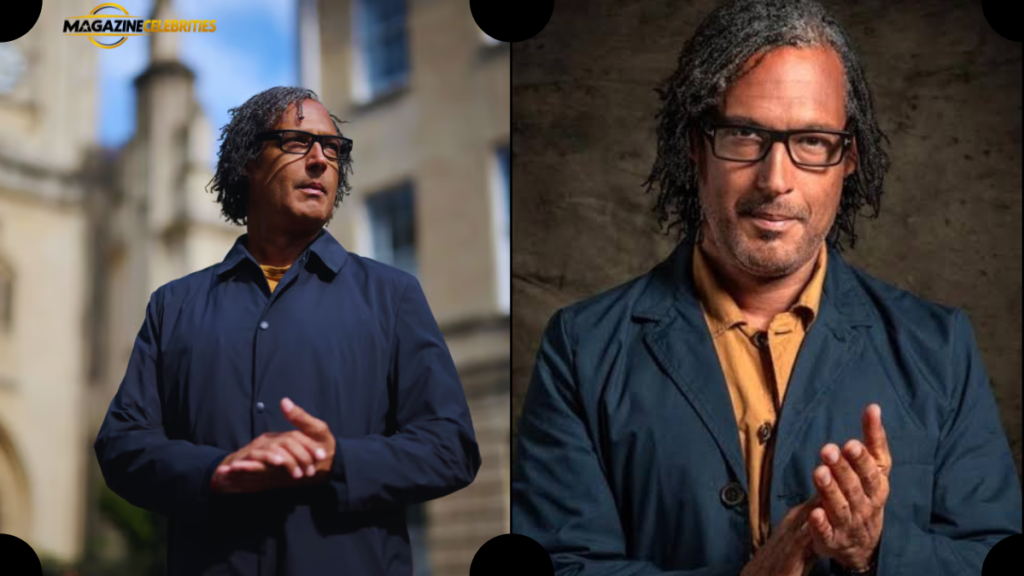

David Olusoga Illness is a respected British historian, author, documentary maker and television presenter. Known for his thoughtful approach to British history and his work exploring race, identity and the legacy of colonialism, he has become a familiar face to television audiences. Alongside his professional achievements, people have increasingly searched for information about his personal life, particularly the subject of David Olusoga Illness.
Interest in his health increased after he spoke publicly about experiencing a serious illness during his forties. He revealed that the condition had kept him away from work for well over a year and that receiving a diagnosis had dramatically changed his life. His comments offered a rare glimpse into a difficult personal experience that he had generally kept private.
The Standard+1
Although David has shared some information about his health, he has not publicly identified the exact physical illness discussed in his recent interview. It is therefore important to distinguish between confirmed information, his earlier comments about mental health and unverified claims circulating online. Understanding this distinction gives readers a more accurate picture of his experiences without making assumptions about his private medical history.
Who Is David Olusoga Illness?
David Olusoga Illness is a British historian and broadcaster recognised for making complex historical subjects accessible to a wide audience. His work frequently examines Britain’s relationship with the wider world, including slavery, migration, racism and the development of modern British society. Rather than presenting history as a collection of disconnected events, he explores how historical decisions continue to influence people’s lives.
Born in Lagos, Nigeria, in 1970, Olusoga moved to Britain during childhood and grew up in Gateshead in north-east England. His experiences growing up in Britain helped shape his interest in identity, belonging and the treatment of minority communities. These subjects have remained important throughout his career, influencing both his television documentaries and written work.
Over the years, he has established himself as an influential public historian. His projects include Black and British: A Forgotten History and A House Through Time, which demonstrate his ability to connect individual experiences with wider historical developments. His professional reputation has also made audiences interested in the person behind the documentaries, including questions about his wellbeing and personal challenges.
What Illness Did David Olusoga Illness Have?
David Olusoga Illness revealed in a 2026 interview that he experienced a serious illness during his forties. He explained that the condition was significant enough to keep him away from professional work for well over a year. This was an important disclosure because it showed that, despite his public profile and demanding career, he had experienced a major personal health challenge.
One of the most revealing aspects of his comments was his description of receiving a diagnosis and suddenly seeing life differently. A serious medical diagnosis can affect almost every part of someone’s routine, from professional responsibilities to family relationships and everyday decisions. Olusoga’s reflections demonstrated that he understood these difficulties through personal experience rather than simply discussing them as an observer.
However, he did not identify the precise physical condition responsible for his extended absence. Readers should be cautious about websites that attach a particular disease to his name without reliable confirmation. The established information is that he experienced a serious illness in his forties, was away from work for more than a year and has chosen not to disclose the complete medical details publicly.
The Standard+1
David Olusoga Illness and His Experience with Clinical Depression
Apart from his more recent disclosure about a serious physical illness, David Olusoga Illness has also spoken openly about his experience with clinical depression. His comments on mental health became particularly important during his 2020 MacTaggart Lecture at the Edinburgh Television Festival. Rather than keeping his experiences private, he used the opportunity to discuss the difficulties faced by people from minority backgrounds working in the British television industry.
During his speech, Olusoga explained that certain professional experiences had left him feeling isolated, marginalised and disempowered. Although he had received exciting opportunities throughout his career, he had also experienced situations that affected his confidence and emotional wellbeing. He revealed that the pressure and culture of the television industry had led him to seek medical treatment for clinical depression.
His decision to discuss depression publicly helped bring attention to an issue that is not always openly addressed in professional environments. His experience also demonstrated that professional success does not automatically protect someone from mental health difficulties. People who appear confident and accomplished in public may still face personal struggles that are not immediately visible to others.
The Guardian+1
Did Racism and Workplace Pressure Affect His Mental Health?
David Olusoga Illness has discussed the relationship between his professional experiences and his mental wellbeing. Throughout his career, he has worked in an industry where he sometimes felt that people from minority backgrounds were not given equal opportunities or recognition. His observations were not simply about individual disagreements but about wider workplace attitudes and institutional culture.
In his 2020 lecture, he described how being patronised and marginalised affected his experience of working in television. He explained that, despite being in demand and enjoying opportunities to tell important stories, there were periods when the environment became emotionally exhausting. These experiences eventually contributed to his decision to seek medical treatment for clinical depression.
His speech also highlighted the importance of creating workplaces where people feel respected and supported. By sharing his experience, he encouraged the television industry to consider how its working culture affects the people responsible for producing programmes. His message went beyond his personal circumstances and raised wider questions about equality, representation and mental health in professional environments.
The Guardian+1
Did David Olusoga Have Cancer?
There has been some confusion about whether David Olusoga’s serious illness was cancer. This confusion is understandable because his recent interview discussed his health experiences while highlighting the work of Macmillan Cancer Support. However, the interview makes an important distinction: Olusoga confirmed that he had not had cancer.
He spoke about the importance of charities and the support they can provide when someone receives a serious diagnosis. His own experience helped him understand how valuable practical assistance, emotional reassurance and supportive communities can be during difficult medical circumstances. His comments were intended to explain why charitable organisations play such an important role in people’s lives.
It would therefore be inaccurate to describe cancer as his confirmed diagnosis. He has not publicly identified the physical illness that kept him away from work for more than a year. Readers should avoid treating the subject of the interview as proof that he personally experienced the cancer-related circumstances discussed in it.
The Standard
Did David Olusoga Have Asthma During Childhood?
David Olusoga has also discussed experiencing asthma during childhood. In an interview with The Big Issue, he reflected on growing up in Gateshead and explained how taking part in sports and visiting the local leisure centre helped him overcome the difficulties associated with childhood asthma.
Physical activities such as judo, karate and basketball were important parts of his younger life. He remembered being enthusiastic about sports and described how the leisure centre helped him build confidence. These experiences were part of a broader period in which physical activity gave him opportunities to develop interests outside the classroom.
His comments about childhood asthma provide another piece of publicly available information about his health history. However, childhood asthma should not be confused with the serious physical illness he discussed in 2026. There is no reliable basis for assuming that these experiences are connected or that childhood asthma explains his later absence from work.
Big Issue
Why Was David Olusoga Illness Away from Work for More Than a Year?
One of the most significant details in David Olusoga Illness recent interview was his statement that his illness kept him away from work for well over a year. For someone with a career involving television production, research, writing and public appearances, such an extended interruption represents a substantial change to everyday life.
His comments suggest that the experience was not a minor health inconvenience. Receiving a serious diagnosis can require people to reconsider their priorities, adjust their routines and depend on others for support. Olusoga’s reflection about how quickly life can change following a diagnosis illustrates the emotional uncertainty that can accompany a difficult medical experience.
Nevertheless, the exact reason for his professional absence remains private. He has not provided a detailed timeline of symptoms, medical appointments, treatment or recovery. It would be irresponsible to fill those gaps with assumptions. The most reliable account is the one he has shared himself: he experienced a serious illness in his forties and spent well over a year away from work.
The Standard
How Did His Health Experiences Influence His Views on Charity?
David Olusoga’s comments about illness have also highlighted his appreciation for charitable organisations. He explained that people facing serious health difficulties can benefit from support that goes beyond medical appointments and treatment. Practical advice, financial guidance and emotional assistance can make an important difference to patients and their families.
His discussion of Macmillan Cancer Support was particularly meaningful because it connected his personal experience with a wider conversation about the importance of community support. He recognised that charities provide services that individuals and families might otherwise struggle to access. These organisations can also help people understand their circumstances and find reassurance during uncertain periods.
Olusoga’s perspective reflects his wider interest in empathy and social responsibility. Throughout his historical work, he has often focused on ordinary people whose experiences have been overlooked. His comments about healthcare support follow a similar principle: individuals should not have to face difficult circumstances without assistance. He believes that charitable organisations play an important role in making society more compassionate and supportive.
The Standard
Is David Olusoga Illness Still Working?
David Olusoga has built a career that combines historical research, television presenting, writing and academic work. His professional achievements have continued to attract attention because he has made subjects such as slavery, colonialism and British identity accessible to audiences who might not otherwise explore them in depth.
His serious illness clearly interrupted his professional routine, but his public comments do not provide enough information to establish every detail of his recovery. He has not published a complete medical update explaining his present condition, treatment history or any ongoing limitations. It is important not to confuse a lack of medical information with evidence that someone is either seriously unwell or completely recovered.
His professional identity remains closely associated with historical storytelling and public education. Rather than allowing unconfirmed health claims to dominate discussions about him, readers should also recognise his contributions to British broadcasting and historical scholarship. His willingness to discuss difficult personal experiences has added another dimension to the way audiences understand his work.
David Olusoga’s Approach to Mental and Physical Wellbeing
David Olusoga’s public comments offer an important reminder that physical and mental health can affect people in different ways. His experience of clinical depression, childhood asthma and a separate serious illness in adulthood represents different aspects of his personal health history. These experiences should not be combined into a single diagnosis or treated as evidence of an underlying condition.
His openness about clinical depression has helped challenge the assumption that successful professionals never experience mental health difficulties. His discussion of childhood asthma also demonstrates that health challenges can change as people grow older. However, his more recent physical illness remains an experience about which he has chosen to share only limited information.
Perhaps the most important lesson from his comments is the value of support. Whether someone is dealing with a physical diagnosis, mental health difficulties or an extended absence from work, having access to understanding people and appropriate professional assistance can make a meaningful difference. Olusoga’s appreciation for charitable support reflects this broader message.
Frequently Asked Questions About David Olusoga Illness
1. What illness does David Olusoga have?
David Olusoga has publicly revealed that he experienced a serious physical illness during his forties. The condition kept him away from work for well over a year. However, he has not disclosed the exact diagnosis, so naming a specific disease would be speculation.
2. Does David Olusoga have clinical depression?
David Olusoga has previously spoken about experiencing clinical depression. During his 2020 MacTaggart Lecture, he explained that difficult experiences within the television industry had affected his mental health and led him to seek medical treatment.
3. Did David Olusoga have cancer?
No. In his 2026 interview, Olusoga explicitly clarified that he had not had cancer. Although he discussed his personal experience of serious illness while highlighting cancer support services, his own physical diagnosis was not identified as cancer.
4. Did David Olusoga suffer from asthma?
Yes. He has spoken about experiencing childhood asthma. In an interview with The Big Issue, he explained that participating in sports and spending time at a local leisure centre helped him overcome difficulties associated with the condition.
5. Why was David Olusoga away from work for over a year?
He explained that a serious illness during his forties kept him away from work for well over a year. He has not shared the precise medical details or explained the complete circumstances behind his extended absence.
6. Has David Olusoga revealed his exact diagnosis?
No confirmed public statement in his recent interview identifies the exact physical illness. He has discussed the seriousness of the experience and its impact on his professional life, but the specific diagnosis remains undisclosed.
7. Is David Olusoga’s current health condition known?
His complete current medical status has not been publicly established. Although he has discussed several health experiences, readers should avoid assuming that he is currently experiencing a particular illness or that he has fully recovered without a reliable update.
Conclusion
David Olusoga’s illness became a subject of considerable interest after he revealed that he had experienced a serious health problem during his forties. His statement that the condition kept him away from work for well over a year offered a rare insight into a challenging period of his life. Although he described the impact of receiving a diagnosis, he did not disclose the exact physical illness. He also clarified that he had not had cancer.
His health history includes other experiences that he has discussed publicly, particularly clinical depression and childhood asthma. His 2020 MacTaggart Lecture provided an honest account of the mental health difficulties he experienced while working in the television industry. These disclosures demonstrate the importance of discussing mental health without stigma and recognising the pressures that can affect people in demanding professions.
Ultimately, understanding David Olusoga’s illness means respecting the difference between confirmed information and online speculation. His willingness to share certain personal experiences has helped audiences appreciate the challenges that can exist behind a successful public career. Nevertheless, his medical privacy deserves respect. Beyond questions about his wellbeing, he remains an influential historian, author and broadcaster whose contribution to British history and television continues to be significant.